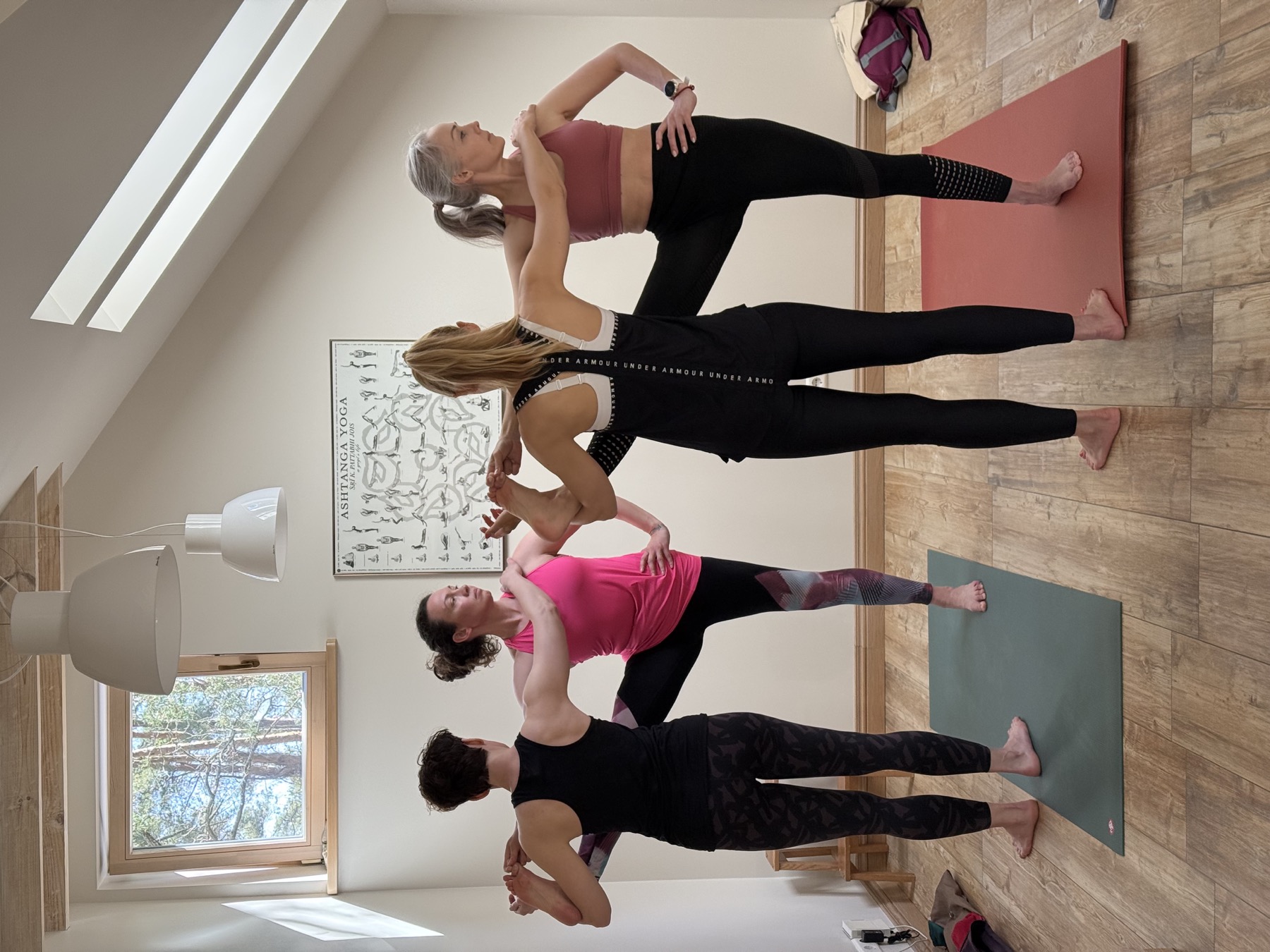
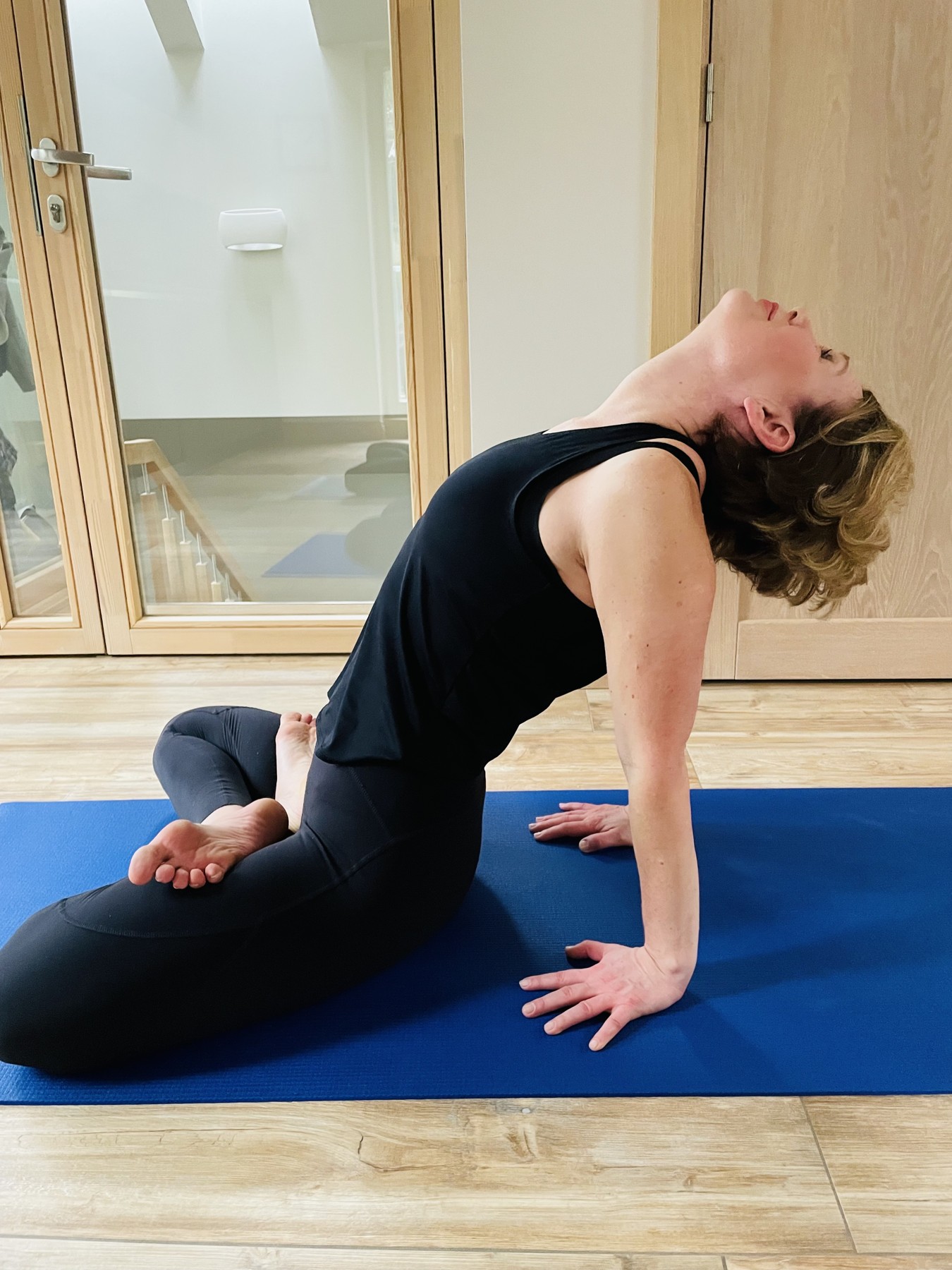
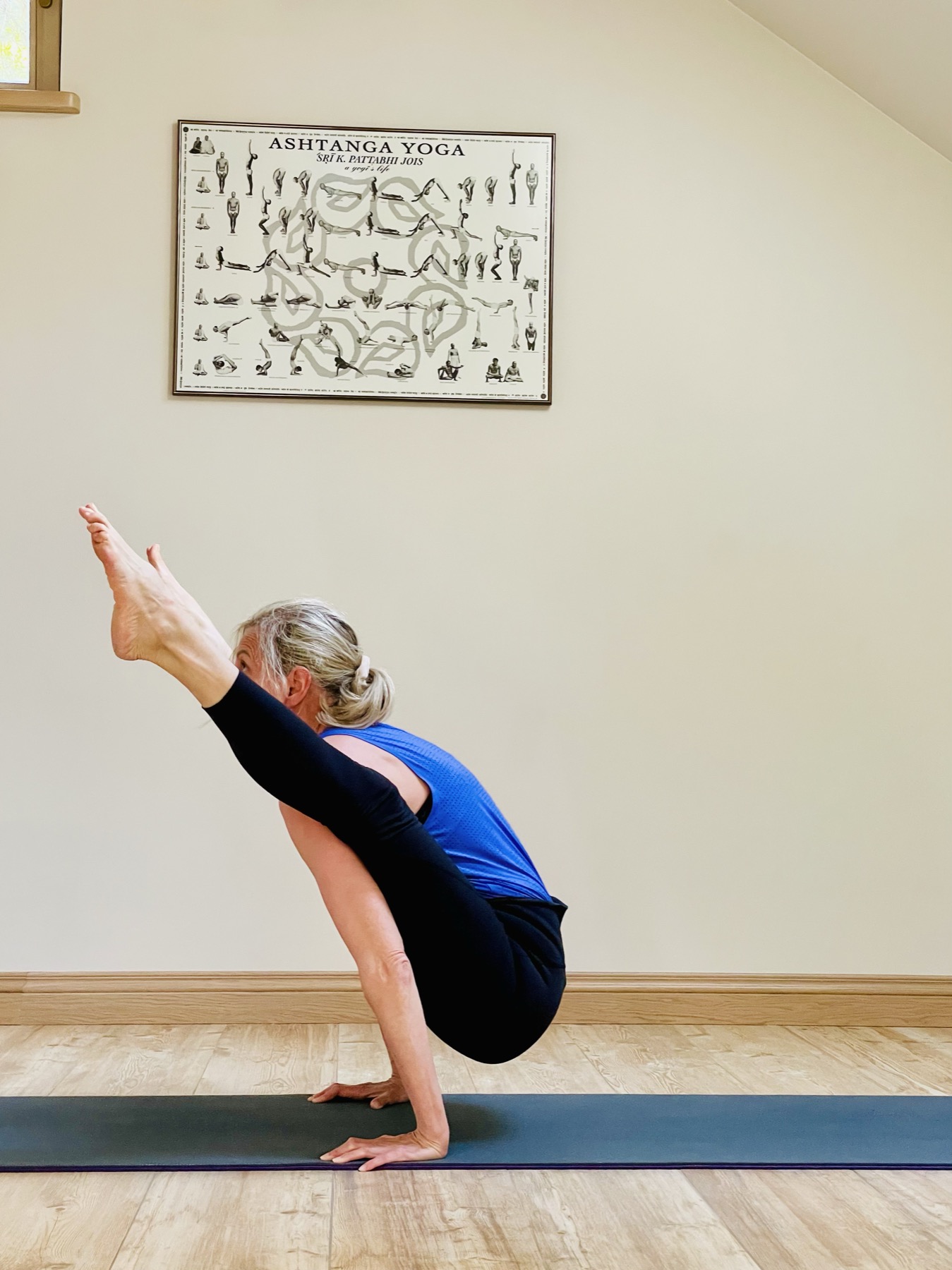
In Ashtanga Vinyasa yoga, we connect movement with the breath and perform the postures in a set order. The breath is at the heart of the practice. It helps connect the postures and maintain a steady rhythm of movement. During practice, we pay attention to the breath, posture, movement, direction of the gaze and internal support for the body.
- Ujjayi breath: steady, conscious breathing with a gentle sound.
- Vinyasa: coordinating movement with each inhale and exhale.
- Asana: a posture that we learn and hold for a set number of breaths.
- Drishti: the direction of the gaze set for each posture, which helps us stay focused.
- Bandhas: internal support and stability for the body.
Tristhana: three points of attention
Tristhana brings together three points of attention: the posture, Ujjayi breath and the direction of the gaze. We use them together during practice. Connecting these points of attention makes the practice more focused and meditative. Gradually, it can become a moving meditation.
We use these principles throughout the practice. Each posture has its place in the sequence. The movements we use to enter and leave a posture are also set. We connect each movement with an inhale or an exhale. The number of these movements coordinated with the breath is called the vinyasa count.
The breath sets the rhythm of movement, bandhas help maintain internal support for the body, and the direction of the gaze helps us stay focused.